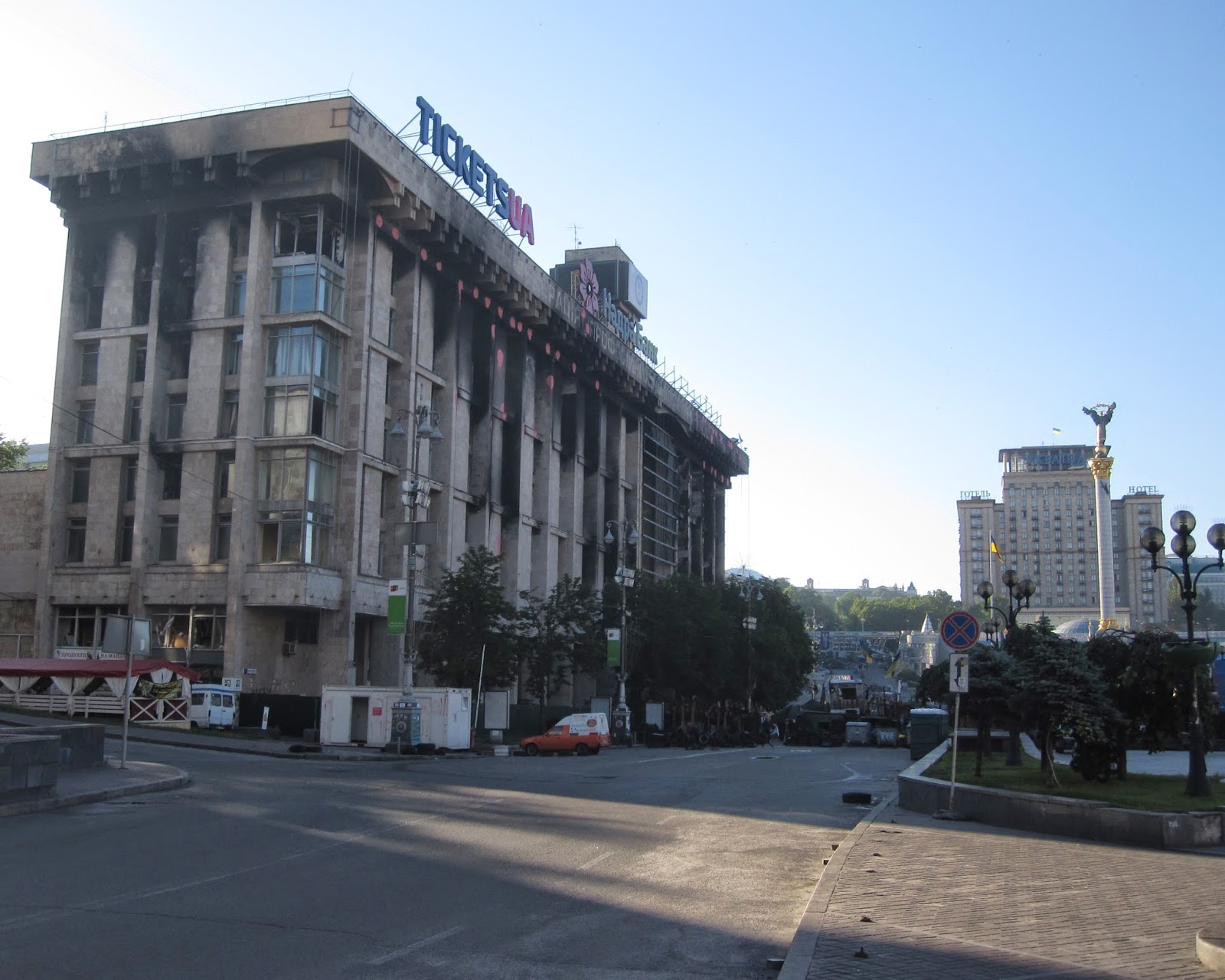
July was an adventure-filled month for the Herrons. We kicked it off with another fantastic 4th of July celebration. While every community in the US has its own special way of commemorating Independence Day, none can really compete with Washington, DC. We started the day in the District, attending the annual recitation of the Declaration of Independence by actors portraying George Washington, Abigail Adams, and other key Revolutionary War figures. We had fantastic seats right behind the stage on the steps of the National Archives. We moved a few feet for parade seats and watched most of it before our next engagement. Several Herron family members live in the area, and we gathered for a cookout. Last year, we watched the fireworks from the National Mall, but the trip home was too chaotic. This year, we found a nice perch on a hill near the
Netherlands Carillon and Marine Corps Memorial for a spectacular view.
 |
| Marine Corps Memorial. |
Outer Banks
Later in the week, we headed to the Outer Banks. En route, we stayed in Hampton and visited one of the newest National Park Service sites, Ft. Monroe. We were unfamiliar with its history, but came away impressed. Not only was it one of the few Union possessions in the south never to be taken by the Confederacy, but it hosted many luminaries, including Harriet Tubman and Edgar Allen Poe. Robert E. Lee was its commander for a time, and after the war Jefferson Davis was imprisoned in a casemate cell. The great battle between the ironclads Monitor and Virginia took place in the waters nearby and was visible from the fort. We learned from another visitor that a German U boat was also spotted and destroyed nearby in WWII. On top of all of this, Fort Monroe is home to a crazy pet cemetery.
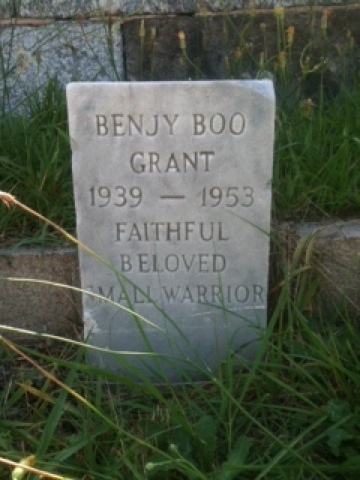 |
| Pet Cemetery at Fort Monroe. |
New England
We ended the month touring New England. Our first stop was Providence, a way station on our journey to the north. We strolled a bit downtown, visiting the Irish Famine Memorial, Brown University, and the Capitol. The next day took us to Cape Cod. Driving up the beautiful coastline, we stopped to dip our toes in the Atlantic, admired the dunes and beaches, and visited the Cape Cod National Seashore sites so Carter could earn another Junior Ranger badge. We toured all the way around the cape to Provincetown, at the tip.
 |
| The life-saving station on Cape Cod. |
Boston
Following our day at Cape Cod, we spent a couple of days in Boston. Once again, the quest for Junior Ranger badges drove many of our activities, but this conveniently included visits to all of the major sites along the Freedom Trail (our plan all along). Erik was especially happy to see the USS Constitution, another part of his War of 1812 Bicentennial obsession.
 |
| Paul Revere's Grave. |
 |
| The Old North Church. |
 |
| Rigging of the USS Constitution. |
 |
| You can't escape history in Boston. This stone was located next to our car in the hotel parking lot. |
Acadia National Park
We spend most of our time in urban areas nowadays, so we especially value opportunities to get out into natural environments. Acadia National Park in Maine was spectacular. We had an opportunity to hike trails along the coast and up Cadillac Mountain, and explore the tide pools. The tide pools were Carter's favorite activity by far. His quest was to find starfish, but we spied mussels, periwinkles, crabs, and other aquatic flora and fauna along the way.
 |
| Mists over Acadia. |
 |
| An evening view. |
 |
| Lovely granite formation near Thunder Hole. |
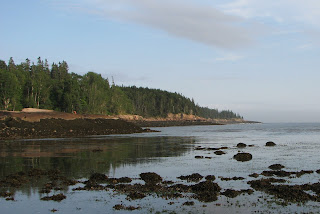 |
| A view of the ocean while exploring tide pools. |
 |
| After scaling down some rocks (less treacherous than the ones you see here), we explored tide pools. |
 |
| Lea exploring tide pools. |
 |
| Lea and Carter looking for sea life in a different tide pool location. |
 |
| Tide pool success! Carter found a starfish. |
 |
| Carter's starfish and its evening meal (see the crab on its arm). |
 |
| An early morning hike. |
 |
| A frog in Bubble Lake. |
Mount Washington
After our whirlwind visit to Acadia, it was off to the brisk, damp, and cold winds of Mount Washington. Carter has enjoyed our hikes up mountains, so we decided to set the bar a bit higher. As the highest peak in the Eastern United States with the most volatile - and worst - weather, it is a bit too difficult for now. Instead, we took the Cog Railway up the mountainside to get a taste of what it would be like to scale it. The Cog Railway is an engineering marvel, and we settled in for a steep 40 minute trek upward. Upon reaching the summit, we had about 10-20 feet of visibility and moderate, chilly winds. But, on the top we met a woman who decided to scale the mountain on her 70th birthday - that day - and she became our inspiration. It is on the list after we train a bit more.
 |
| Cog railway. |
 |
| Heading into the clouds. |
 |
| At the summit. Next time we'll really earn it. |
 |
| The winds were not 231 MPH, but they were still brisk. |
Bretton Woods
Mount Washington is near an important spot for a political scientist like Erik: the place where the IMF was founded after World War II. We stayed in the lodge nearby and took a quick spin through the meeting room where the agreement was signed.
 |
| Erik and Carter in the room where the negotiations took place. |
 |
| The Mount Washington Resort. |
Vermont
The final day of our visit (aside from the long drive home) was a spin through Vermont. Erik spent two summers studying Russian in a small town south of Montpelier and wanted to stop by to see how things had changed. The Russian School at Norwich University closed its doors in 2000, as demand for intensive Russian language training evaporated, but the private military college that hosted the school is still active. We stopped in Montpelier for lunch and a bit of shopping at the Farmer's Market (where we picked up delicious maple items), and then headed to Northfield. The final stop of the day was the Marsh-Billings-Rockefeller National Park, Vermont's only NPS site, for one more Junior Ranger badge. The park is extremely difficult to find, but we made it and learned a bit about conservation.
 |
| Vermont's golden-domed state house. |
 |
| Erik on the campus of Norwich University. |
 |
| Carter working on his Junior Ranger activities. |
 |
| The woods at Marsh-Billings-Rockefeller. |
 |
| Success! Junior Ranger badge #26! |
While we were exhausted at the end of the trip, it also inspired us to get out and see more during our final year in the DC area.